
How to Build A Strong and Stable Wall on A Hill
Retaining wall construction for sloped yards is the process of cutting into a slope, building a solid base, and installing a wall that holds soil in place. The goal is to stop erosion, create level space, and protect your home or landscaping. When done right, a retaining wall turns a steep, hard-to-use yard into flat, usable ground.
What You Need Before Starting
Before you start any retaining wall construction project, you need a clear plan. Sloped yards put pressure on walls. The taller the wall, the more weight it must hold back.
Here is what you should have ready:
- A basic site plan with measurements and slope angle
- Knowledge of local building codes and permit rules
- Drainage plan to move water away from the wall
- Proper materials like concrete blocks, natural stone, or timber
- Gravel and base material for drainage and support
In many areas, walls over a certain height need permits or engineering plans. Always check before digging.
Step-by-Step Process
Building a wall on a slope takes careful work. Skipping steps can lead to leaning, cracking, or collapse.
- Mark and measure the area. Outline where the wall will sit. Use stakes and string to keep lines straight.
- Excavate the base. Dig a trench at the bottom of the slope. The trench should be deep enough for a solid base layer.
- Add base material. Fill the trench with crushed stone or gravel. Compact it tightly. This supports the wall.
- Install the first row. The first row must be level. Take your time here. Every row above depends on it.
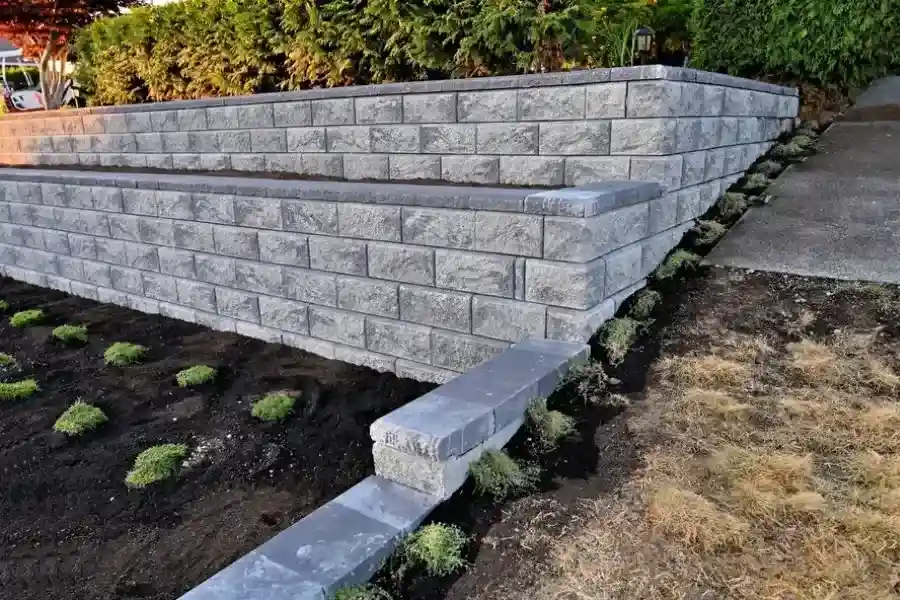
- Stack remaining rows. Stagger joints if using blocks. This adds strength. Check level often.
- Add drainage behind the wall. Place gravel and a drain pipe behind the wall. This moves water away and reduces pressure.
- Backfill and compact. Fill soil in layers. Compact as you go to prevent settling.
Proper drainage is one of the most important parts of retaining wall construction. Water buildup is a common reason walls fail.
Common Mistakes to Avoid
Many DIY walls fail within a few years. Most issues come from simple errors.
- Not digging deep enough for the base
- Skipping gravel backfill
- Forgetting a drain pipe
- Building too tall without reinforcement
- Using poor-quality materials
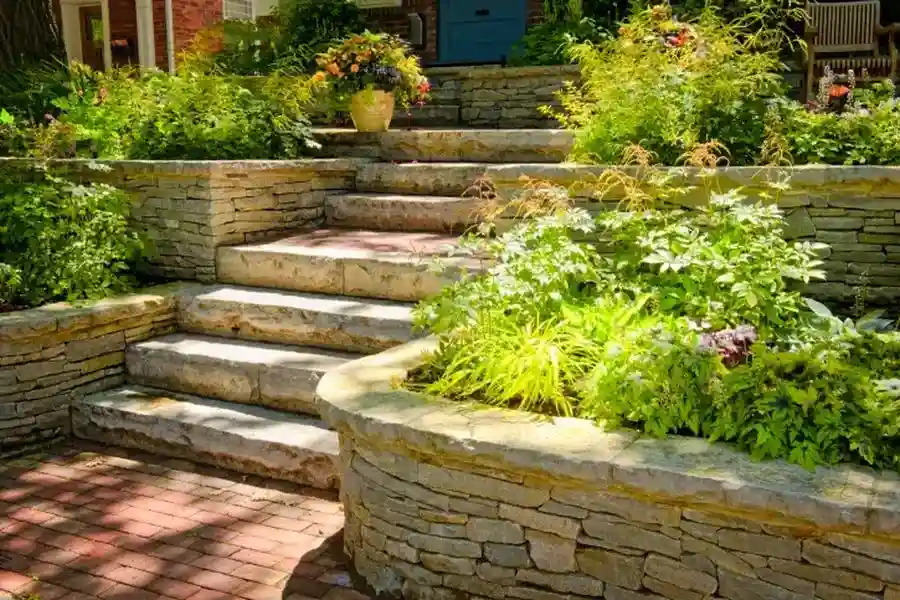
Another mistake is trying to build a very tall wall at once. For steep yards, it is often better to build tiered walls. This spreads pressure across multiple levels and looks more natural.
When to Call A Professional
Some projects are fine for skilled homeowners. Others need expert help.
You should call a professional if:
- The wall is over four feet tall
- The slope is very steep
- Water runoff is heavy during storms
- The wall is close to your home foundation
- You are unsure about soil stability
Sloped yards can create hidden problems. Clay soil expands when wet. Sandy soil shifts easily. Poor drainage can cause soil to push hard against the wall. A professional team can review the site, suggest the right materials, and build a structure made to last.
In some cases, reinforcement like geogrid fabric or concrete footings may be needed. These add strength and keep the wall stable over time.
Final Recommendation and Next Steps
If your yard feels steep, uneven, or hard to use, retaining wall construction could be the solution. A well-built wall protects your property, improves safety, and creates new outdoor space for patios, gardens, or walkways. Start with a clear plan, focus on drainage, and never rush the base work.
If you are planning a project in Prescott Valley, AZ, we can help you design a wall that fits your yard and soil conditions. At Forevergreen Landscaping JR LLC, we build strong, long-lasting retaining walls backed by real field experience. Call us at (928) 273-9723 to schedule a site visit and see what options are right for your property.